Normally these posts are written in advance and published on a schedule. I heard two similar but different quotes yesterday that I had never heard before that caused me to pause that and post them instead. They are that important.
Here are the two questions I want you to ask yourself now, later, tomorrow, and every day:
“How would the person I would like to be, do the thing I am about to do?”
Like most other people, I feel it is my obligation to express my thoughts and feelings around what has happened in our country since the death of George Floyd on Memorial Day.
I will say from the outset that as an aging white male I am completely unqualified to speak on behalf of any other people who have been unfairly judged, targeted, and discriminate against. As a person who loves God and loves all people, however, my heart hurts, and my anger, dismay, and sorrow demand action.
So we’re approaching the end of May. It seems like the Pandemic has been going on for a lot longer than the ten weeks or so that we have all been adjusting to the “new normal.” How are you doing? How are you feeling?
I have to admit, the last two to three weeks for me have been the hardest. At the beginning of our shelter in place orders, perhaps the novelty made it interesting. As time has worn on, and the situation is slowly seeming to turn for the better, I have to admit I am struggling to remain focused on my goals. How about you?
Since I made the decision to write a book a little over a year ago, I have become familiar with a term that prior to that time I don’t know if I had ever heard. Since becoming acquainted with it, I seem to hear it and become challenged to overcome it almost daily. What is that term? Imposter Syndrome.
It’s not that this doesn’t exist for you and me, even if we are not aware of it, in fact, most of us are asked to confront it almost daily. If you are not, I would argue that you are suppressing some deep, longing desires to try something but the Imposter Syndrome keeps you in your comfort zone.
Last week, we defined a haven as a place of safety, shelter, and refuge. Then we determined that the best way to discover these havens is by developing a positive mindset. The first step, determined by last week’s post was to overcome fear by taking action.
The next strategy to developing a positive mindset, and finding a safe haven for our mental image of ourselves and how we talk to ourselves is to develop the habit of persistent consistency.
The late, great Zig Ziglar, as he often did, imprinted this simple, yet incredibly profound message in my mind many, many years ago. Mr. Ziglar said consistency was working every day, or as often as necessary until your goal or objective was achieved. Persistence was showing up every day and doing just a little bit more, al little bit different, or a little bit better than the day before.
After character and integrity, which Zig attributed to his incredible worldwide success, he would say that being P.C. was the number two reason for his success. This is the kind of P.C. that the world could use a lot more of, as opposed to the P.C. that often occupies today’s headlines.
The fact of the matter is really quite simple. You show up every day and you do what needs to be done. No matter who or what may try to block your way, and tell you why it can’t or shouldn’t be done. If your ‘why’ is big and meaningful enough to you, then the what and the how will never stop you.
Once you have overcome the mental and verbal roadblocks to achieving your success and nothing will ever stop you from showing up every day to accomplish your dreams and goals, your consistency almost organically begins to be multiplied with increasingly persistent efforts.
Whether it’s positive momentum, a deeper belief in yourself and your objectives, or both, once consistency is established, persistence is not far behind. It may take days, months, or even years, but persistent efforts over time eventually multiply into greater results than determined people ever imagined possible.
I love to use the analogy of the penny versus one million dollars whenever I speak in front of an audience. I discovered the principle in Darren Hardy’s iconic book, The Compound Effect. All these years later, not only does the ruse still fool most people, but it drives home the point of persistence better than anything else I’ve ever heard.
Simply, if I offer you one penny versus one million dollars, I suspect you would take the million dollars. What if I offered you the same deal except I told you that you could multiply the value of the penny every day for 30 days? Most people still want the million dollars. And they’re dead wrong.
Why? Because if you double the value of one penny day after day for thirty days, at the end of that time period you would have nearly $5.5 million!! That is the power of persistent consistency. Make it yours, and not only will you develop a more positive mindset but you will be unstoppable!
Please share your thoughts and feedback. I love getting and posting your comments below. What do you need to be more consistent at and what is your WHY? Please subscribe to be notified when new content is available and feel free to share with your friends and associates/
Haven: -noun. 1. A harbor or port. 2. Any place of shelter and safety; refuge; asylum.
In these days of uncertainty, loss of freedoms, and fear, couldn’t we all use a safe haven right now? If you’re like me, you and your family likely have a “happy place” that you like to go to as often as you can. Perhaps some of you have been able to escape there during our shelter in place existence the last several weeks.
Most of us, however, have only been able to go there in our minds. And for many of us, it may be a very long time before we are able to go again, be it physically and/or financially. But it is of the mind where I would like to turn your focus to with this post.
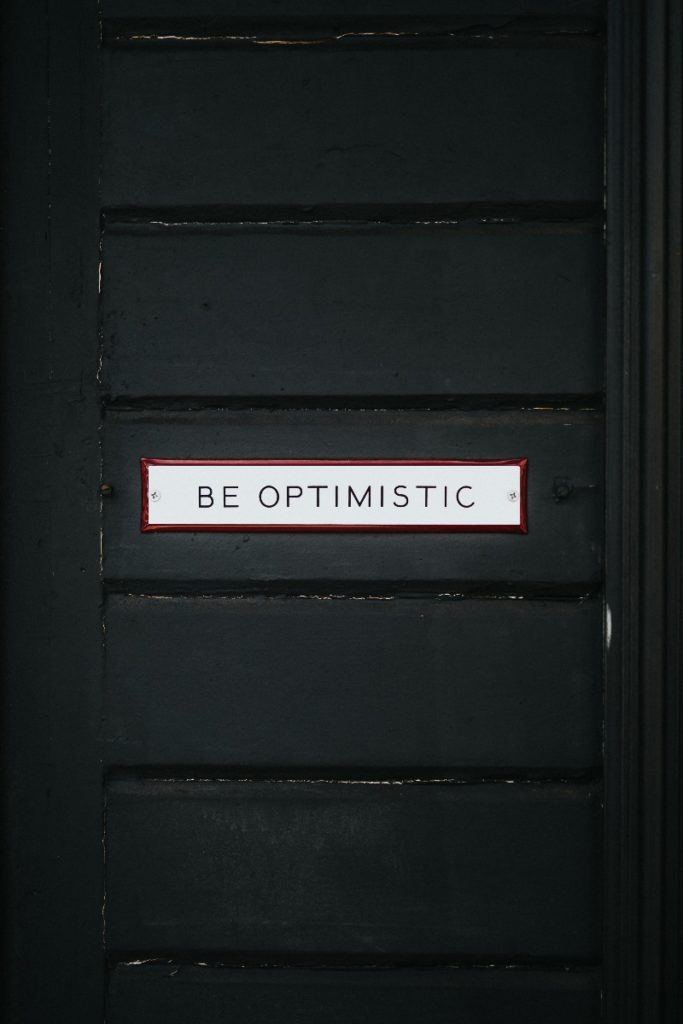
What do you see in the image above? Do you see a sign in a dark room? Do you see a door with seemingly no handle and no way to escape the darkness you are trapped in? Or is your focus solely on a sign of hope in a background of darkness? Do you see an opportunity to pass from where you are currently to where you want to be?
Whether you feel trapped in the darkness, or you are eager to escape, how you view your world, the events around you, and especially how you respond, is dependent on your mindset, for your focus determines your outcomes.
In my last post, I wrote about the lessons I learned from my dad. As I stated, the majority of things that I discovered, or at least the things that stuck, were learned by watching not what he said, but rather by watching what he did.
This week, in Part 2, let me tell you some of the things I did and learned over my 33+ year career working in the same company, in the same industry, and in the same office for every single one of those 10,000+ days that made all the difference in the world to me. Every single day. And it doesn’t end there, because I am still benefitting and learning new things today.
Last week, a friend encouraged me, for at least the second time, to write about my experiences and my lessons learned while working my whole life in my family’s business. For those who may not know, I started working alongside my father when I was ten or eleven years old, helping him pack and ship shoes to customers.
As I grew, I worked after school for several years during high school and when home on breaks away from college. I graduated from college on Saturday and Monday morning I was at work where I always knew I wanted to be, working for my mother and father in our wholesale women’s shoe company. I never worked anywhere else for a day in my life for the next 33 and a half years. And never wanted to.
Much is and has been written lately about keeping a positive mindset. Even before ‘COVID-19’ was a blip on the radar, not to mention THE daily headline, I was writing in my book, Mustard Seed Faith, about the first step to living a life of significance, began by thinking differently than most other people.
For you see, even in normal circumstances, even when we are not in the middle of a worldwide crisis, the majority of our thoughts and consciousness are focused on ourselves and how we are being perceived by other people. If we are not thinking directly about ourselves, then we are thinking about how to make other people think about us by clamoring for their attention.